
Introduction: Caring for the Whole Person
As we pursue spiritual rest and greater intentionality, it becomes clear that caring for the body and caring for the mind are closely connected. Moments of peace, reflection, and spiritual grounding are often easier to cultivate when daily habits also support balance and well-being.
Physical stewardship does not begin with chasing perfection or quick results. Instead, it begins with paying closer attention to the routines, choices, and habits that shape everyday life.
Many people discover that simplifying aspects of their lifestyle—including the foods they regularly consume—can help support a greater sense of consistency, energy, and mindfulness throughout the day.
The goal is not extreme restriction or rigid rules. The goal is creating a sustainable foundation that supports intentional living.

Section 1: Becoming More Mindful About What We Consume
Modern life often prioritizes convenience and speed, especially when it comes to food. Packaged and heavily processed options can become a regular part of busy routines because they are accessible and easy to incorporate into daily life.
At the same time, many people choose to become more mindful about the ingredients in the foods they eat and how certain eating patterns affect their overall sense of well-being.
Rather than focusing on fear or rigid food rules, a balanced approach encourages awareness and moderation. Some individuals prefer meals built around simpler ingredients, whole foods, and less processed options because these choices help them feel more steady and supported throughout the day.
Every person responds differently to foods and dietary patterns, and nutritional needs can vary widely based on lifestyle, culture, preferences, and health considerations.
The deeper principle is intentional stewardship—making thoughtful choices that align with long-term well-being and sustainability.
Section 2: The Clean-Label Mindset
For many people, a clean-label approach simply means paying closer attention to ingredient lists and choosing foods with simpler, more familiar ingredients whenever practical.
This mindset is not about achieving dietary perfection, following extreme restrictions, or viewing foods as morally “good” or “bad.” Instead, it is about cultivating awareness and making informed choices that support a balanced lifestyle.
A clean-label mindset may include:
- prioritizing whole or minimally processed foods when possible,
- preparing meals more intentionally,
- staying hydrated,
- eating with moderation,
- and developing sustainable habits over time.
These small, consistent choices can help create routines that feel more grounded, manageable, and supportive in everyday life.
Section 3: Supporting Daily Well-Being Through Stewardship
Physical stewardship extends beyond food choices alone. Rest, movement, hydration, and stress management all contribute to a more balanced foundation for daily living.
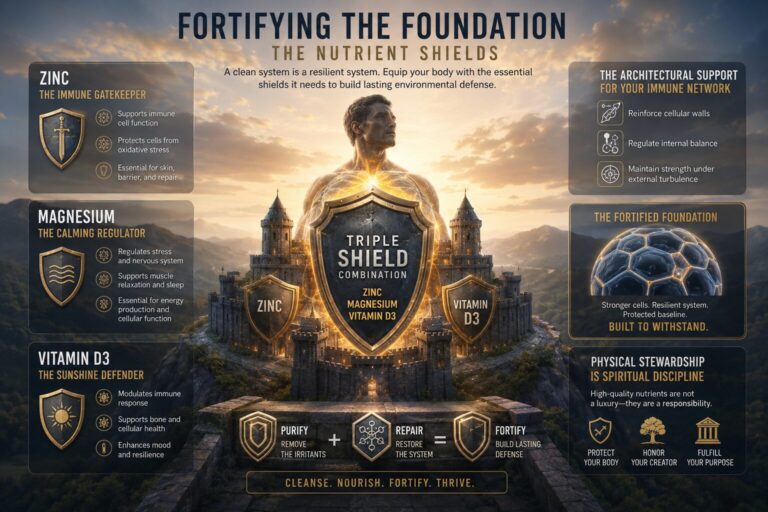
Some individuals also choose to include nutrients such as zinc, magnesium, or vitamin D3 as part of their wellness routines. Nutritional needs vary from person to person, and anyone considering dietary supplements should consult a qualified healthcare professional for guidance specific to their individual needs.
The purpose of stewardship is not to pursue control or perfection. It is to care responsibly for the body we have been given and to build habits that support long-term resilience, gratitude, and intentional living.
Conclusion: A More Intentional Foundation
The human experience involves the connection of body, mind, and spirit. When one area of life feels neglected or overwhelmed, it can affect our overall sense of balance and well-being.
By slowing down, becoming more mindful of daily habits, and building sustainable routines, we create a stronger foundation for peace, focus, and spiritual reflection.
Intentional living is not about fear, pressure, or rigid standards. It is about cultivating habits that support a healthier rhythm of life—one that leaves room for gratitude, purpose, and rest.
Your Next Step:
Build Physical Endurance
Explore how movement, consistency, and physical stewardship can support resilience and long-term well-being in [Module 4: BODY (Physical Stewardship)].
Cultivate Relational Peace
Learn how intentional living and spiritual grounding can influence relationships, communication, and daily interactions in [Module 5: WISDOM (Relational Peace)].
Disclaimer
This content is intended for informational and inspirational purposes only and should not be considered medical or nutritional advice. Individual dietary needs and experiences vary. Always consult a qualified healthcare professional before making significant changes to your diet, lifestyle, or supplement routine.
Leave a Reply