
The Breath of Life: A Gift of Presence
“Then the Lord God formed a man from the dust of the ground and breathed into his nostrils the breath of life, and the man became a living being.” — Genesis 2:7
Across Scripture, breath is closely connected with life, presence, and spiritual awareness. From the opening chapters of Genesis, breath is portrayed as a gift from God—something both deeply physical and deeply meaningful.
In everyday life, breathing often becomes automatic and overlooked. Yet many people discover that slowing down and becoming more intentional with their breathing can create moments of calm, reflection, and renewed focus amid the demands of daily life. Modern routines can feel fast-paced and noisy. Constant notifications, packed schedules, and ongoing responsibilities can leave little room for stillness. Intentional breathing practices offer a simple way to pause, become present, and reconnect with a sense of peace and grounding.
This is the purpose of the Deep Breathing Buffer: creating intentional moments of quiet that support both physical stillness and spiritual reflection.

Stewardship Through Stillness: A Personal Reflection
For me, intentional 4-7-8 breathing became a consistent daily practice over the past six months. Setting aside time each day to slow down, breathe deeply, and step away from distraction helped cultivate greater calm, cognitive clarity, and restfulness in my routine.
I also became more mindful of broader wellness habits—such as rest, nutrition, hydration, and reducing unnecessary stress where possible. Together, these practices helped create a stronger sense of balance and intentionality in daily life. Some individuals choose to include supplements such as Zinc, Magnesium, or Vitamin D3 as part of their personal wellness routines to support this baseline.
The deeper lesson for me was not about optimization or performance. It was about stewardship—learning to slow down, care for the body responsibly, and create space for peace and reflection.
Why Intentional Breathing Matters
Intentional breathing practices have been used for centuries in many cultures and traditions as a way to encourage calmness, focus, and mindfulness. When people slow their breathing and focus their attention, they often report feeling more centered and less overwhelmed by the pace of daily life.
These moments of pause can help create mental space for prayer, gratitude, reflection, or quiet contemplation. Rather than viewing breathing as merely automatic, intentional breathwork invites us to become more aware of the present moment and more attentive to how we carry stress and tension throughout the day.

Lessons from the Animal Kingdom
When we observe the natural world, we can see that different creatures move through life with very different rhythms and patterns. Some animals are known for slow, steady movement and long periods of rest, while others operate with fast-paced energy and constant activity.
These observations can serve as a simple reminder of the value of slowing down and living with greater intentionality.
| Animal | Average Lifespan | Breathing Rate (Breaths per Minute) |
|---|---|---|
| Tortoise | 100-150 years | 2-4 |
| Whale | 70-90 years | 3-5 |
| Elephant | 60-70 years | 4-10 |
| Human | 70-80 years | 12-20 |
| Dog | 10-15 years | 10-35 |
| Rabbit | 8-12 years | 30-60 |
| Mouse | 1-5 years | 100-200 |
Lessons from Daily Life and Performance
Intentional breathing is used in a variety of settings—from athletic training to mindfulness practices to high-pressure professions.
High-Pressure Environments: Professionals in demanding roles often practice controlled breathing exercises to remain calm and focused during stressful situations.
Athletics: Athletes may use breathing routines during training or competition to maintain concentration, pacing, and recovery between intense moments of activity.
Mindfulness Communities: Breathing practices are commonly utilized as a practical way to pause, reset, and become more present throughout the day.
High-Performers Who Incorporate Breathing Practices
Intentional breathing techniques are used in many areas of life where focus, composure, and steady performance are important. From athletics to mindfulness practices, many individuals incorporate breathing routines as part of their preparation and daily rhythm.
Professionals in high-pressure environments, including military training programs, often practice controlled breathing exercises to help remain calm and focused during stressful situations.
Athletes may use breathing routines during training or competition as part of maintaining concentration, pacing, and recovery between intense moments of activity.
In disciplines such as martial arts, breathing is frequently integrated into movement and technique to encourage rhythm, control, and body awareness.
Breathing practices are also commonly discussed within mindfulness, wellness, and performance-focused communities as a practical way to pause, reset, and become more present throughout the day.

How and When to Practice
One of the simplest aspects of intentional breathing is that it can be practiced almost anywhere and requires no special equipment.
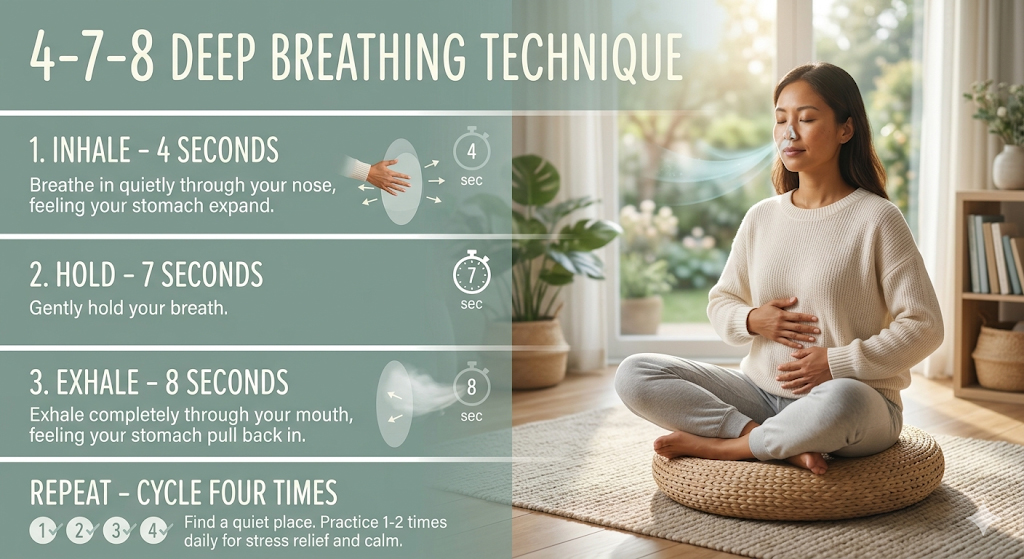
The 4-7-8 Breathing Practice
Inhale: Breathe in gently through your nose for 4 seconds.
Pause: Hold your breath comfortably for 7 seconds.
Exhale: Slowly exhale through your mouth for 8 seconds.
Repeat: Continue for several rounds at a relaxed and comfortable pace.
If the timing feels uncomfortable, adjust the rhythm naturally. The goal is not perfection, but intentional stillness and steady breathing.
Suggested Times to Practice
Morning: Begin the day with a few quiet moments to encourage focus and intentionality.
Mid-Day Pause: Take a short break during busy or stressful moments to slow down and reset.
Evening Wind-Down: Practice before bed as part of a calming nighttime routine and transition into rest.
The Bridge to Spiritual Rest
Breathing practices are not a replacement for faith, nor are they a cure for life’s challenges. Instead, they can serve as a practical rhythm that helps create space for stillness, reflection, and spiritual attentiveness.
In Hebrew, the word Ruach is often associated with breath, wind, or spirit. For many believers, this connection serves as a meaningful reminder of God’s presence and sustaining care. In moments of intentional stillness, prayer, and reflection, many people find it easier to step away from distraction and refocus on what is true, lasting, and spiritually grounding.
The goal of the Deep Breathing Buffer is simple: to create space—physically, mentally, and spiritually—for quiet, gratitude, and rest.
Disclaimer: This content is intended for informational and inspirational purposes only. Individual experiences with breathing practices and wellness routines may vary. Always consult a qualified healthcare professional before beginning new health, exercise, or supplement practices, especially if you have existing medical or respiratory conditions.
About the Author
The Author, John is a researcher and practitioner focused on the intersection of biological systemic repair and spiritual vitality. As the founder of Maadan, he integrates his professional background with a long-term commitment to holistic wellness. His work centers on the principle of ‘intentional stewardship’—the practice of honoring the body through clean-label nutrition and breathwork to sustain mental and spiritual clarity.