
Introduction: The Weight of a Restless World
There is a difference between ordinary tiredness and the feeling of being emotionally or spiritually worn down. Many people experience seasons where life feels unusually heavy—when constant responsibilities, endless distractions, and the pace of modern life leave little room for stillness or peace.
Even after a full night of sleep, it is possible to feel mentally scattered, emotionally drained, or disconnected from the things that once brought joy and meaning.
In a culture that often encourages constant productivity, the common response to exhaustion is usually “push harder.” More caffeine, tighter schedules, and endless motivation are often presented as the solution. Yet many people discover that rest involves more than simply recovering physical energy. Sometimes what is needed most is space to slow down, breathe deeply, reflect, and reconnect with what grounds the spirit.

Section 1: The Noise of Modern Life
Modern life places a constant demand on our attention. From the moment the day begins, we are surrounded by notifications, headlines, obligations, and information competing for mental space.
Over time, this continual noise can make it difficult to feel settled or fully present. Many people find themselves carrying emotional tension from work pressures, personal responsibilities, social concerns, and the fast pace of everyday life.
This experience is not necessarily a personal failure or lack of discipline. Often, it is simply the result of living in an environment that rarely allows moments of quiet.
Without intentional rhythms of rest and reflection, it becomes easy to move through life in a constant state of distraction and overwhelm. Creating space for stillness can help restore perspective and allow the mind and spirit to slow down again.

Section 2: The Value of Intentional Pause
When life feels overwhelming, it can be difficult to immediately think your way into peace. In those moments, simple physical practices—such as stepping away from distractions, slowing your breathing, or sitting quietly for a few minutes—can help create a sense of calm and grounding.
Intentional pauses do not remove life’s challenges, but they can create space to reset mentally, emotionally, and spiritually.
Many people find that deep breathing, prayer, quiet reflection, or time spent outdoors helps interrupt the constant rush of the day and encourages a greater sense of steadiness and clarity.
These practices are not about escaping responsibility. Rather, they are about creating moments of stillness that allow us to return to our responsibilities with greater intention and peace.
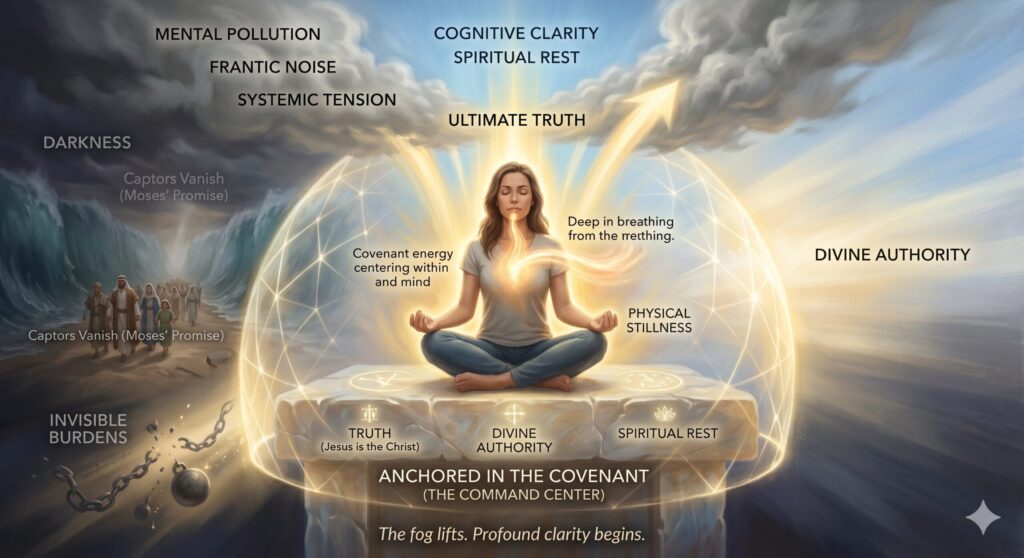
Section 3: Anchoring the Mind in Faith
For people of faith, spiritual rest is not found merely in silence, but in remembering what is true and unchanging.
In the middle of uncertainty, prayer and reflection can become an anchor for the mind and heart. Centering our thoughts on God’s promises can help shift our attention away from fear, pressure, and distraction toward hope, trust, and peace.
For Christians, the Gospel serves as a reminder that we are not meant to carry every burden alone. Many believers find comfort and stability in focusing on the foundational truth of their faith and spending intentional time in prayer, worship, or Scripture.
These moments of spiritual grounding can help create a renewed sense of perspective and calm during demanding seasons of life.
Section 4: Caring for the Whole Person
Spiritual well-being and daily habits are often closely connected. While no routine can remove every challenge, caring for the body responsibly can support a more balanced and sustainable lifestyle.
Simple habits such as:
- getting adequate rest,
- staying hydrated,
- moving regularly,
- spending time outdoors,
- and choosing nourishing meals
can all contribute to an overall sense of well-being and steadiness throughout the day.
Rather than pursuing health out of pressure or appearance, physical stewardship can be approached as an act of gratitude and responsibility—caring for the life and body we have been given.
The goal is not perfection. The goal is building rhythms that support peace, resilience, and intentional living over time.
Conclusion: Returning to Rest
True renewal often begins by slowing down enough to recognize how much we are carrying.
Life will always contain responsibilities, uncertainty, and moments of exhaustion. But even in busy or difficult seasons, it is possible to create intentional spaces for stillness, reflection, and spiritual renewal.
By stepping away from constant noise, practicing moments of pause, and anchoring ourselves in faith, we create room for greater peace, clarity, and steadiness in everyday life.
Rest is not weakness. It is a reminder that we were not designed to carry every burden alone.
Your Next Step:
Practice Intentional Pause
Explore simple breathing and reflection practices that can help create moments of calm and stillness throughout the day in: [Module 1: The Deep Breathing Buffer].
Build Sustainable Rhythms
Learn more about mindful habits, daily stewardship, and creating supportive routines in [Module 3: IMMUNITY and The Clean-Label Standard].
Disclaimer
This content is intended for informational and inspirational purposes only and should not be considered medical, psychological, or professional health advice. Individual experiences may vary. Always consult a qualified healthcare professional regarding concerns related to physical or mental health.
Leave a Reply